Spay / neuter & vet
The single kindest thing you can do — it prevents unwanted litters and lowers cancer risk. Add yearly check-ups and core vaccines.
Keeping Cats Happy
Cats tell you everything — with their tail, ears, eyes and posture. Learn to read the signals, meet their real needs, feed it like the little carnivore it is, and you'll have a contented cat for all nine lives.
Interactive · Mood translator
Pick a mood and watch the cat change. Ears, eyes, tail and posture are a whole language once you know the words.
Confident & happy
The basics, done right
The single kindest thing you can do — it prevents unwanted litters and lowers cancer risk. Add yearly check-ups and core vaccines.
Cats live in 3D. Shelves, cat trees and window perches turn a flat room into a rich, climbable kingdom.
One box per cat, plus one spare. Scoop daily, keep it away from food, and most "accidents" simply disappear.
Two 10-minute wand sessions a day let a cat stalk, chase and "catch" — burning energy and calming anxiety.
Fresh water (many cats love a fountain), and a weekly brush — daily for long-hair — to cut hairballs and bond.
Indoor cats live far longer. Add secure "catios" or leash walks for the thrill of outdoors without the dangers.
The professional napper
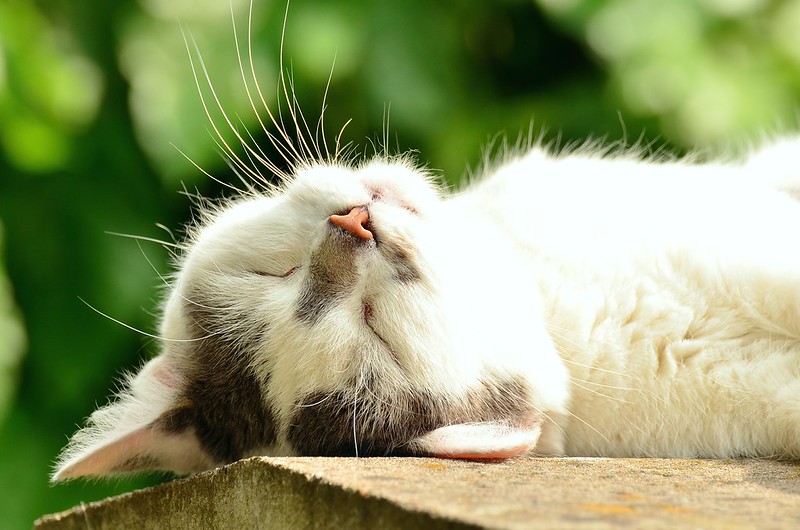
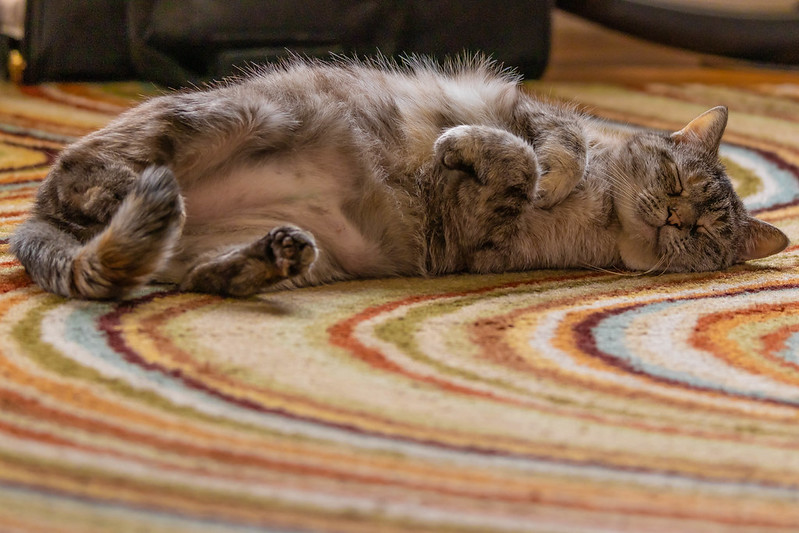
Cats spend roughly 70% of their lives asleep — around 12–16 hours a day, and more for kittens and seniors. They're crepuscular, wired to hunt at dawn and dusk, so the 3 a.m. zoomies are a feature, not a bug.
Much of that is light "cat-nap" sleep — ready to wake in an instant — punctuated by short bursts of deep, dreaming REM. A cat that sleeps trustingly in the open, especially belly-up, is telling you it feels completely safe.
Setting up
Cats are climbers, squeezers and expert escape artists. A little preparation turns your home into a safe, stimulating playground.
One box per cat plus a spare, in quiet, low-traffic spots away from food and water. Scoop daily. Most “accidents” simply vanish once the setup suits the cat.
A cat can jump 5–6 feet straight up, so baby gates and counters are mere suggestions. Instead of fighting it, give legit high spots — cat trees, wall shelves, a window perch — and they'll mostly leave the forbidden ones alone.
Secure window screens and balconies (cats misjudge and fall), tie up blind cords and hide loose string and hair-ties (swallowing risk), and remove toxic plants — lilies are deadly to cats.
Scratching is grooming, stretching and territory — never spite. Offer sturdy vertical posts and horizontal pads near where they sleep and it saves the sofa.
Enrichment
A bored cat is a stressed cat. Play and comfort aren't luxuries — they're how a small predator stays sane indoors.
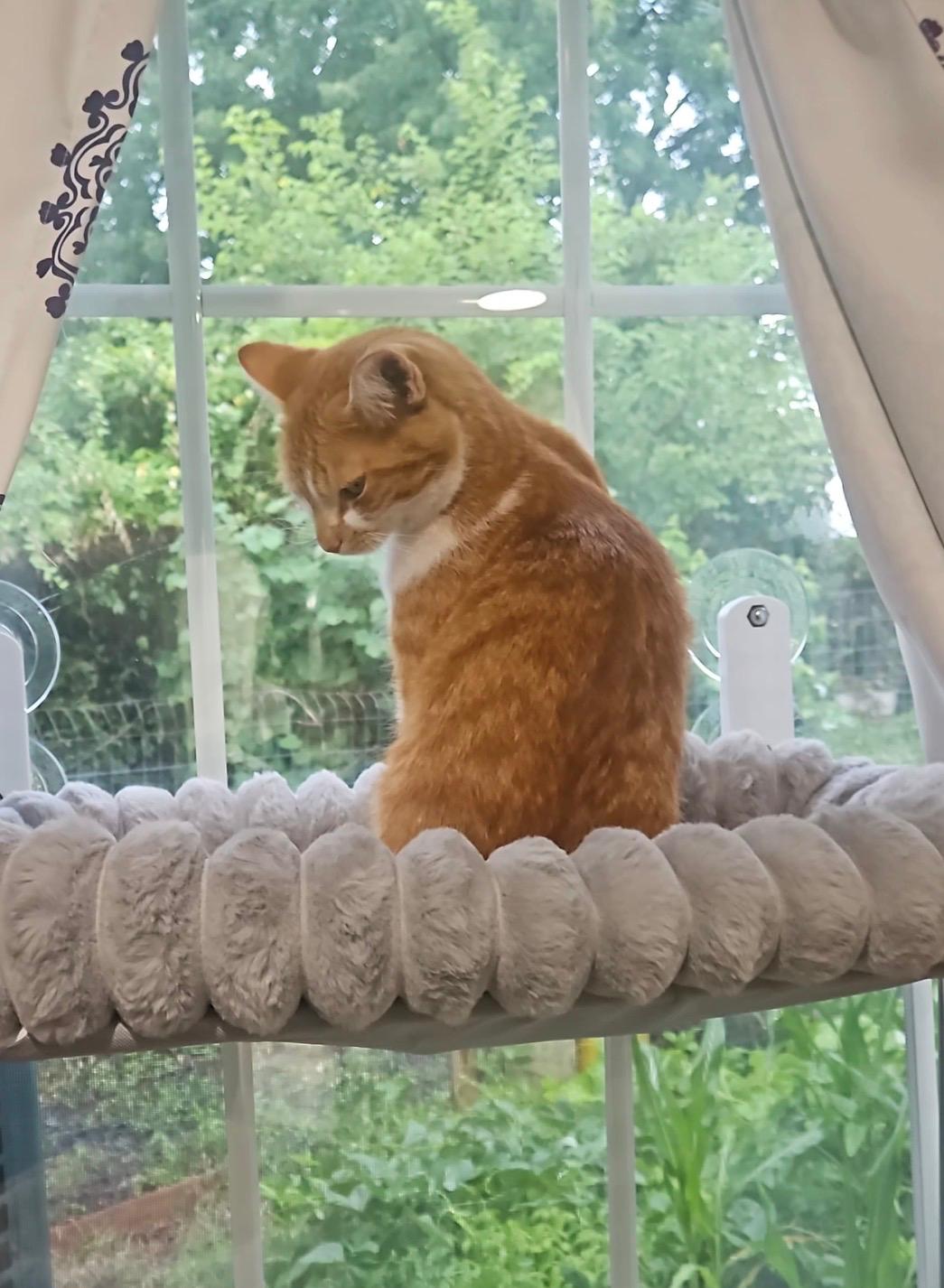
Cats adore surveying their kingdom from up high, especially a sunny window with “cat TV” — birds and squirrels outside. Add perches, warm sunbeams and a predictable routine and you've got a confident, contented cat.
All cat play rehearses the hunt: stalk, chase, pounce, bite. Wand “prey” toys you flick and drag are the gold standard; puzzle feeders make them work for dinner; and a small rotated set of toys beats a big pile left out.
About two-thirds of cats melt into blissful rolling at catnip; silvervine works on even more — both safe and non-addictive. And yes: a plain cardboard box may out-rank any toy you buy.
End each session by letting the cat “catch” the toy, then feed it — mimicking the natural hunt-eat-groom-sleep cycle. With other cats they chase and wrestle; a quick pause when ears pin back keeps play friendly.
Try Laser Pounce and Cat Memory Match — and read the cat translator to learn what each sound your cat makes really means.
The inner cat
For years cats were dismissed as aloof. The science disagrees: in attachment tests, about two-thirds of cats show a secure bond with their humans — the same proportion found in babies and dogs.
They likely see us as a safe base and a kind of oversized, non-threatening cat — and they identify “their” people as much by scent as by sight. A slow blink across the room is a genuine sign of trust; blink slowly back.
Water & baths. Descended from desert wildcats, most never needed to swim; wet fur turns heavy and cold, and they hate losing control. Healthy cats groom themselves spotless — baths are rarely necessary.
Also on the list: being grabbed or squeezed, a dirty litter box, sudden change and chaos, and strong smells (citrus, heavy perfume). Offer choice, not force — patience wins a cat far faster.
Out & about
A handful of local services keep a cat healthy, and several cost far less than most people expect.
Wellness exams, core vaccinations, dental cleaning, microchipping and parasite control. Establish one before you need it — and know your nearest 24-hour emergency vet in advance.
Most cats groom themselves, but a groomer helps with mat removal, de-shedding, nail trims, sanitary trims, and the occasional bath for seniors, long-hairs or flat-faced breeds.
You rarely need to pay full price. Humane societies, the ASPCA, and local SNAP (Spay/Neuter Assistance Program) clinics offer subsidised or free surgeries. Search “[your area] low-cost spay neuter”.
Your local humane society is the hub for adoption, surrender help, trap-neuter-return (TNR) of community cats, and free advice when you're stuck.
Finding them: start with the ASPCA and Humane Society national sites, or simply ask your vet — they'll know the good local options. Availability and pricing vary by area; this isn't an endorsement of any single provider.
Living with allergies
The real culprit is Fel d 1 — a tiny protein made in a cat's saliva and skin glands that spreads onto the coat during grooming and then drifts through the home on flakes of dander. It's behind about 95% of cat allergies, which affect up to 1 in 5 people.
Because it's the protein, not the hair, no cat is truly “hypoallergenic” — though some individuals (and some breeds) shed noticeably less of it.
Clean the air & surfaces: HEPA air purifiers, frequent vacuuming, and fewer carpets and drapes that trap allergen.
Set boundaries: keep the bedroom cat-free and wash your hands after cuddles; have a non-allergic housemate brush the cat regularly.
Treat the allergy: allergy shots (immunotherapy) can desensitise you over time.
Neutralise it at the source: newer allergen-reducing cat foods coat the cat's saliva with an egg-derived antibody (IgY) that binds Fel d 1 — studies show roughly a 47% drop in active allergen after a few weeks. See the Feeding section below for how feline nutrition works.
Feeding · Built to eat meat
Cats are obligate carnivores — evolution tuned them to run entirely on meat. Understand that, and both the science and the dinner bowl make sense. Below: test yourself on what's safe, then see what an ideal bowl looks like.
Interactive · Could you save a life?
A food appears. Tap Safe or Toxic before you'd let a cat near it. Some answers might surprise you.
This game is for learning, not diagnosis. If your cat eats something toxic, call your vet or a pet poison line immediately.
Why meat, and only meat
Unlike dogs (and us), cats can't thrive on plants. Millions of years as hunters stripped out the ability to make certain nutrients themselves, so they must get them pre-made, from prey:
An amino acid cats can't produce in enough quantity. Without it from meat, they suffer heart failure and go blind. It's why cat food is not interchangeable with dog food.
Cats need lots of protein and pre-formed vitamin A (from liver and other tissue) — they can't convert plant beta-carotene the way we do.
Evolved from desert cats, they have a famously weak thirst drive and are built to get moisture from prey — which is why wet food matters so much.
And remember: cats can't taste sweetness at all. A sweet tooth would be useless to a pure meat-eater, so evolution simply switched it off.
Rough targets for a healthy adult cat (dry-matter basis).
Wet or fresh food pushes moisture up and carbs down — closest to the mouse-shaped diet cats evolved on.