Egypt: the divine cat
Cats were sacred to the goddess Bastet, guardians of home and harvest. Harming one — even by accident — could be punished by death, and families shaved their eyebrows in mourning when a cat died.
Myth, Superstition & Legend
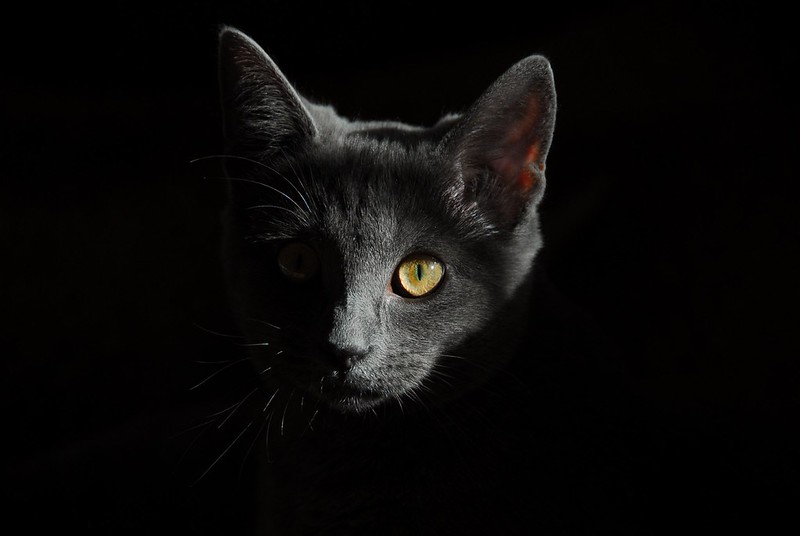
No animal carries more superstition than the cat — sacred goddess, witch’s familiar, lucky charm, internet icon. Here’s what cultures across the world believe, starting with the most misunderstood of all: the black cat.
Interactive · Around the world
Choose a country and watch the luck-meter swing. The very same black cat is an ill omen in one place and a bringer of fortune in the next.
—
—
Pick a country to begin.
Set the record straight
Tap a card to turn it over.
Around the world & through time
The black cat is only the beginning. Wherever cats and people have lived side by side, myth has followed close behind.
Cats were sacred to the goddess Bastet, guardians of home and harvest. Harming one — even by accident — could be punished by death, and families shaved their eyebrows in mourning when a cat died.
The love-goddess Freyja rode a chariot pulled by two great cats. Cats meant fertility and blessing, and farmers left them offerings to protect the fields.
The beckoning maneki-neko waves in fortune — yet folklore also warns of the shapeshifting bakeneko and two-tailed nekomata. To Japan, a cat is both blessing and mystery.
Cats are cherished in Islamic tradition and considered ritually clean. Legend says the Prophet Muhammad loved his cat Muezza so dearly he cut his sleeve rather than wake her.
For centuries nearly every ship carried a cat — to hunt rats and to bring luck. A cat walking toward a sailor meant good fortune; extra-toed “polydactyl” cats were prized for their sea-legs.
During the witch panics, cats — black ones above all — were branded witches’ familiars or witches in disguise. The mass culls that followed are a grim (and self-defeating) chapter of cat history.
A famous tale explains why the clever cat is absent from the Chinese zodiac: the rat tricked it into missing the Jade Emperor’s race — the reason, they say, cats forever chase rats.
The old “cat lady” stereotype is fading fast as cats become rulers of the internet — icons of independence, introversion and comfort for a whole online generation.
Perhaps the most stubborn modern stereotype casts women who love cats as lonely “cat ladies” — an image with Victorian roots. Research has found no link between cat ownership and loneliness or poorer mental health, and a younger generation is gleefully reclaiming the title.
The black cat that medieval Europe feared is now a proud mascot of goth, witchy and alternative subcultures — a symbol of independence, mystery and quiet rebellion, stitched onto everything from tarot decks to tote bags.
Pop psychology loves to sort us into “cat people” and “dog people,” stereotyping cat lovers as more introverted, independent and open-minded. The real differences are small — and plenty of people happily refuse to choose.
The science
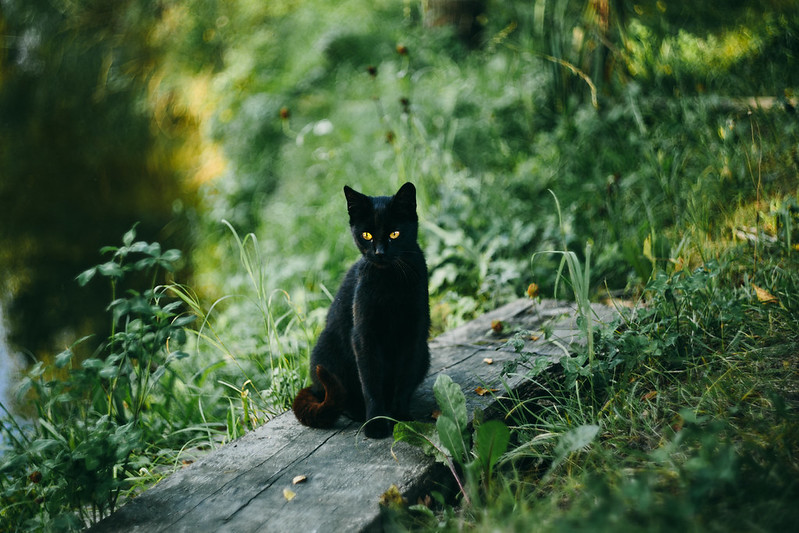
A black coat is melanism: an abundance of the dark pigment eumelanin, produced by variants of genes like ASIP and MC1R. At least 22 of the world's cat species have melanistic individuals — the "black panther" is really a melanistic leopard or jaguar.
Intriguingly, the mutations behind black coats sit near genes involved in immunity, and researchers have wondered whether melanism offers some disease resistance — one reason it may have persisted so widely.
Those luminous eyes look brighter simply by contrast against the dark fur — and in sunshine a black cat's coat can "rust" to a reddish-bronze, revealing a hidden tabby pattern underneath.
Black cats wait longest in shelters. If you're adopting, consider the cat everyone else overlooked — you'll get the same purrs, the same mischief, and eyes like little moons.